Introduction: Pioneer Beginnings
Rockaway Beach Historic Walking Tour
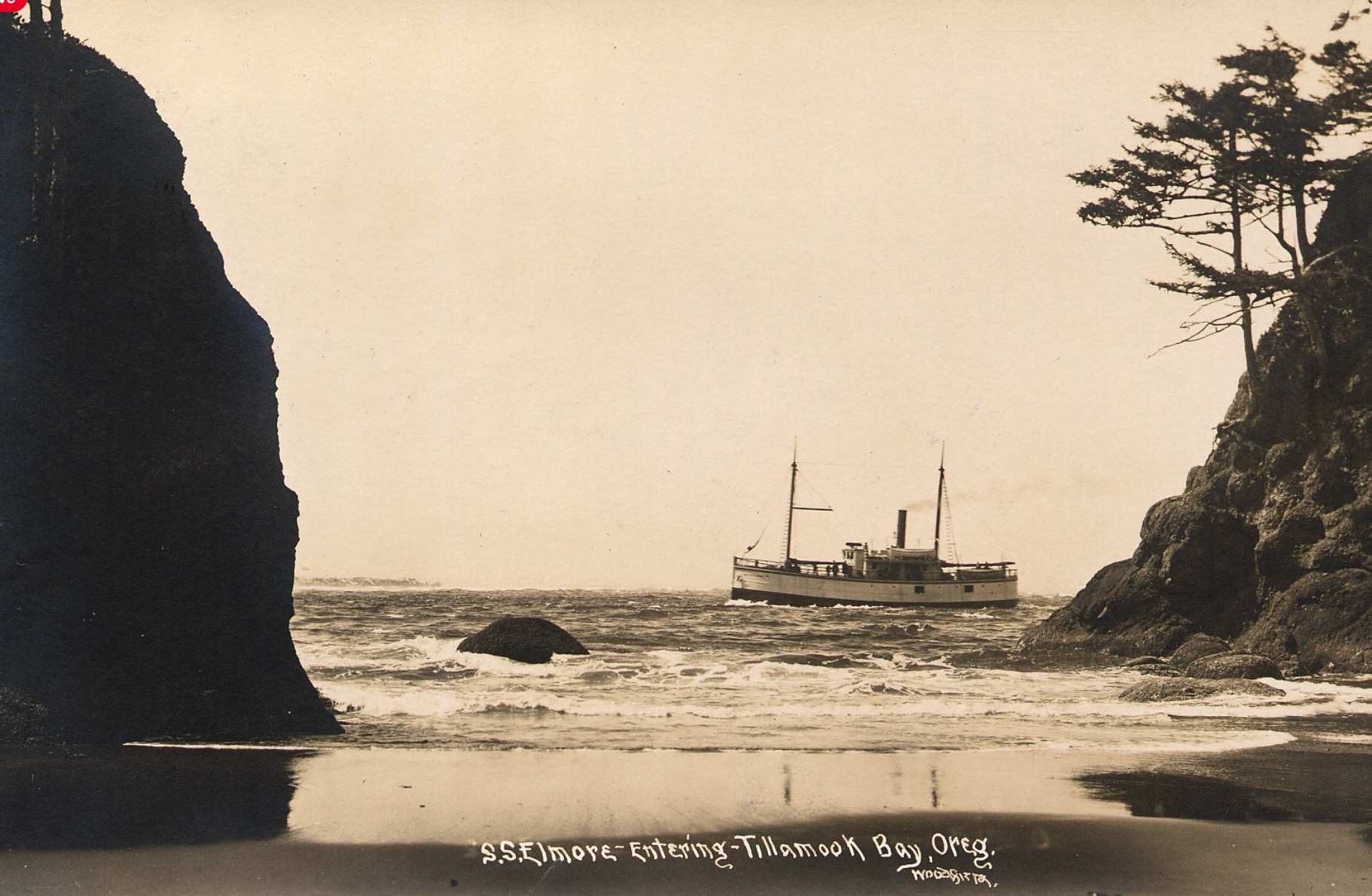
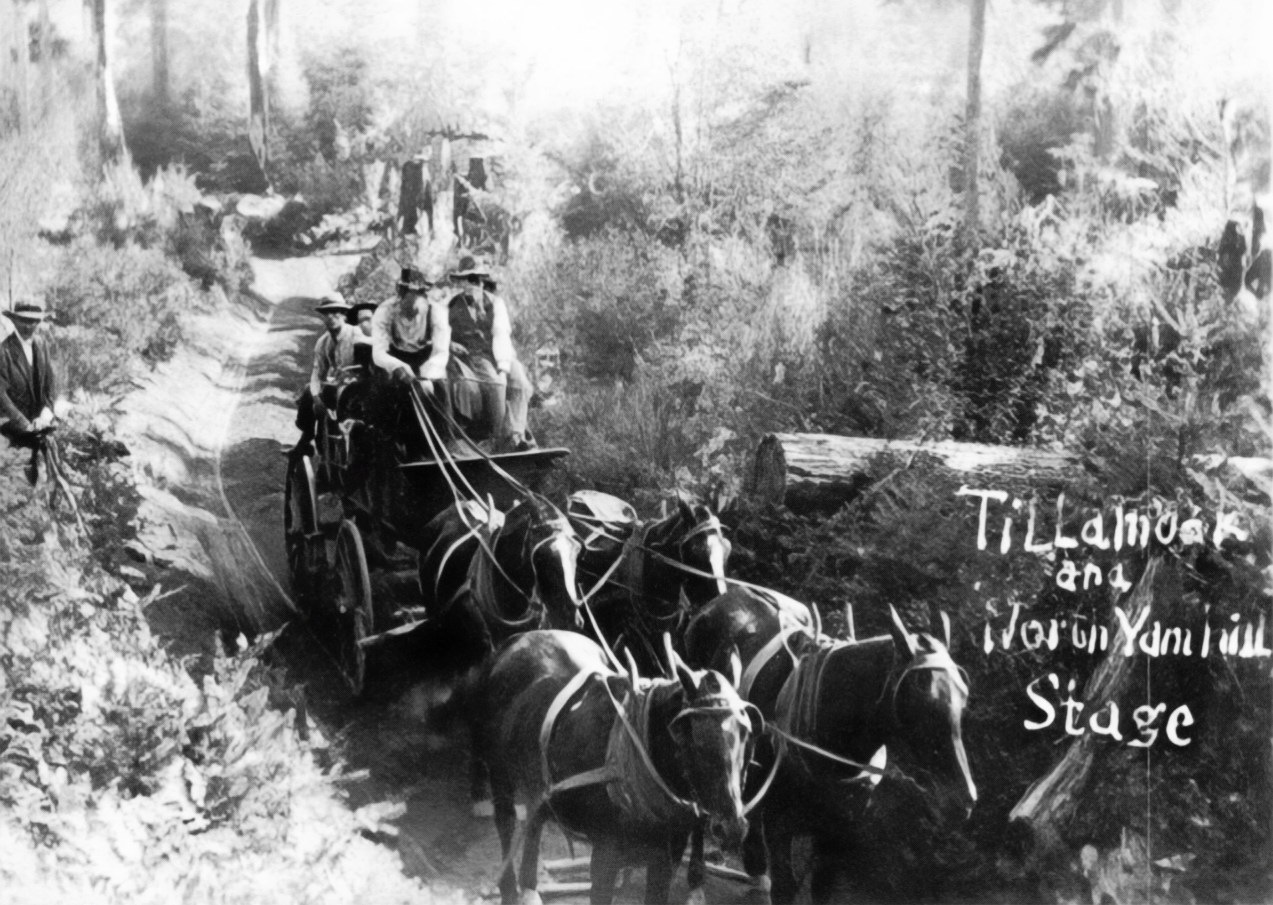
The earliest pioneers arrived in the 1850s in what is now Tillamook County. For the next 20 years, they traveled almost exclusively on existing Native American trails and by boat to enter or exit the county. Transportation by water was then a hit-or-miss proposition. This means steamboats bound from Astoria to Tillamook Bay would often find the bar too rough to enter. Freight and passenger service could also be held up in Astoria for weeks at a time.
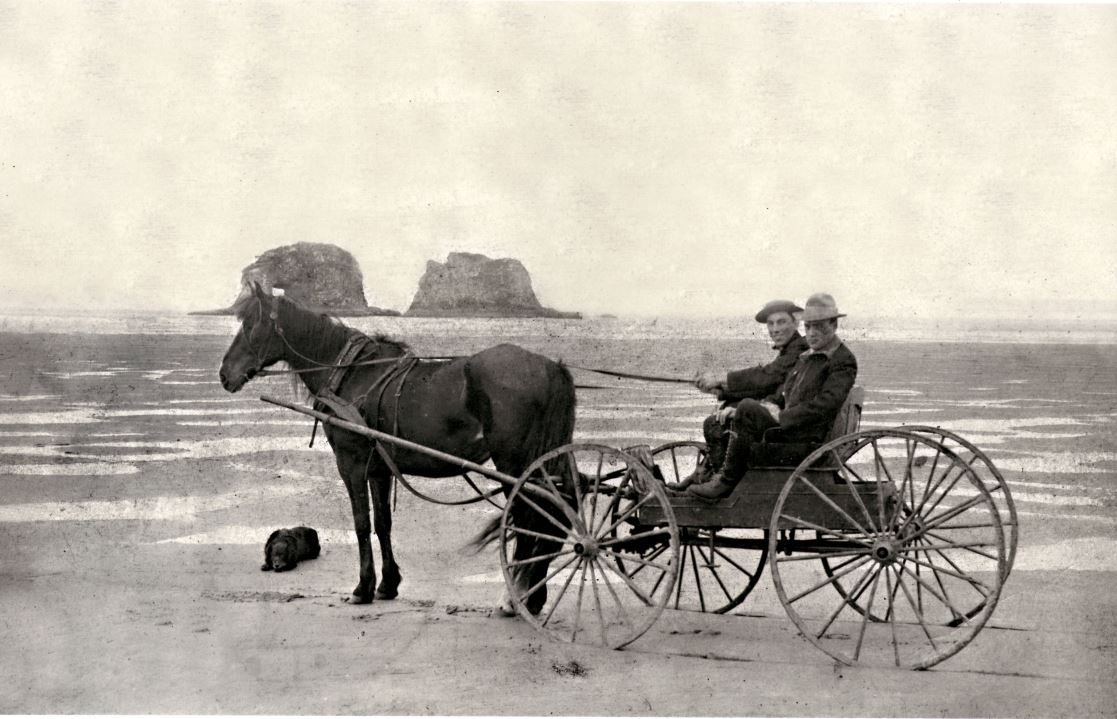
Before jetties were built, there was a wide sandy beach all the way from Garibaldi to Nehalem Bay, referred to as the “Garibaldi Beaches”. This was the only passage within the area. Only the pioneering few resided here, driving up the beach by horse and wagon or walking during the low tide.
Three actions bolstered development:
- 1862 Congressional Act awarding homesteads to actual settlers
- 1905 Lewis & Clark Centennial Expo in Portland, where investors from across the country saw potential to access the region’s timber
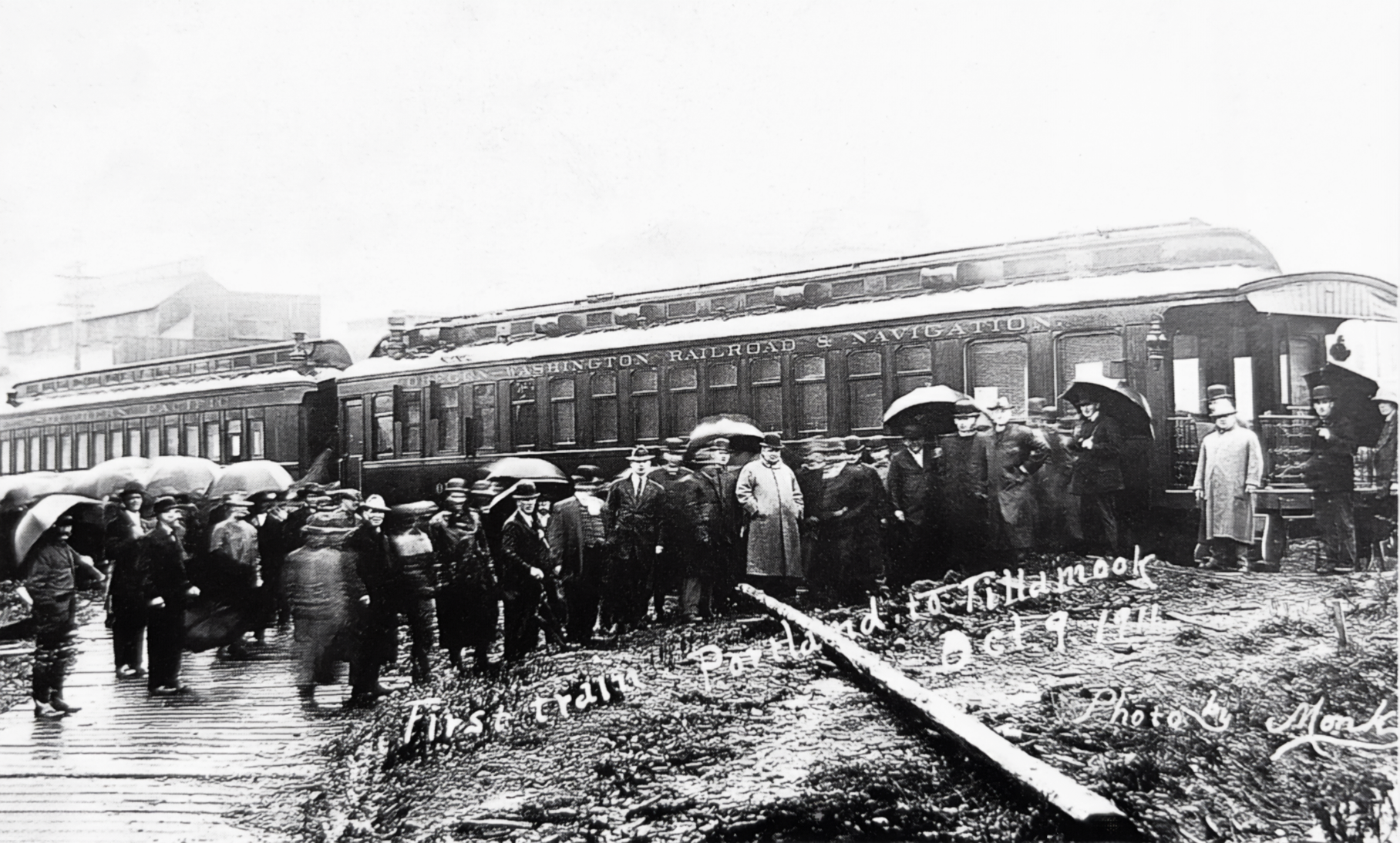
- In 1905, Elmer Lytle incorporated the Pacific Railway & Navigation Company, aiming to provide this service. The first steam engine arrived in Tillamook in 1907.
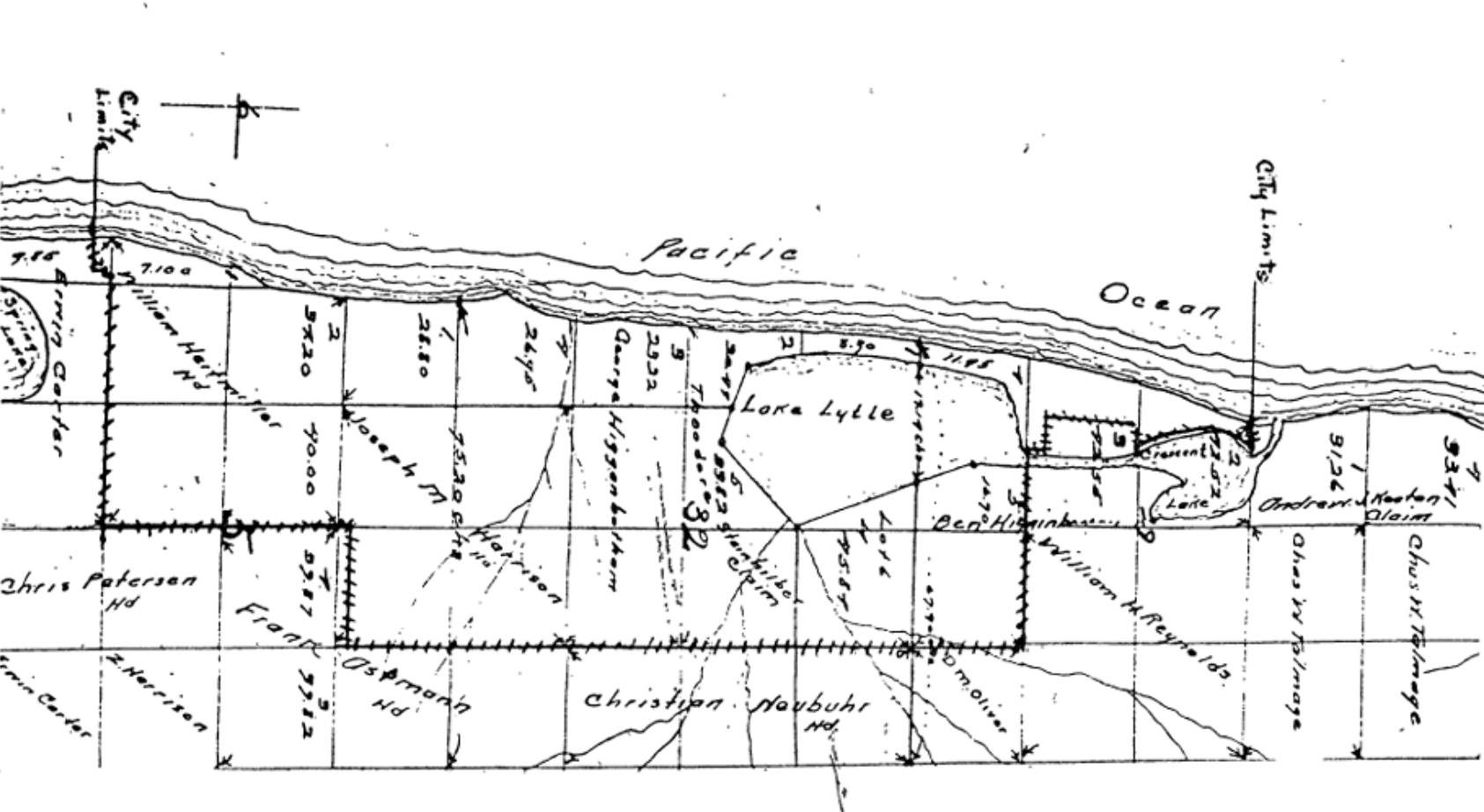
The coastal land claims, once considered nearly worthless, took on a new value, and a flurry of subdividing into townsites began in 1909.
Navigate to the information panel on the east train depot railing.
Fast travel to a different topic by selecting one below!